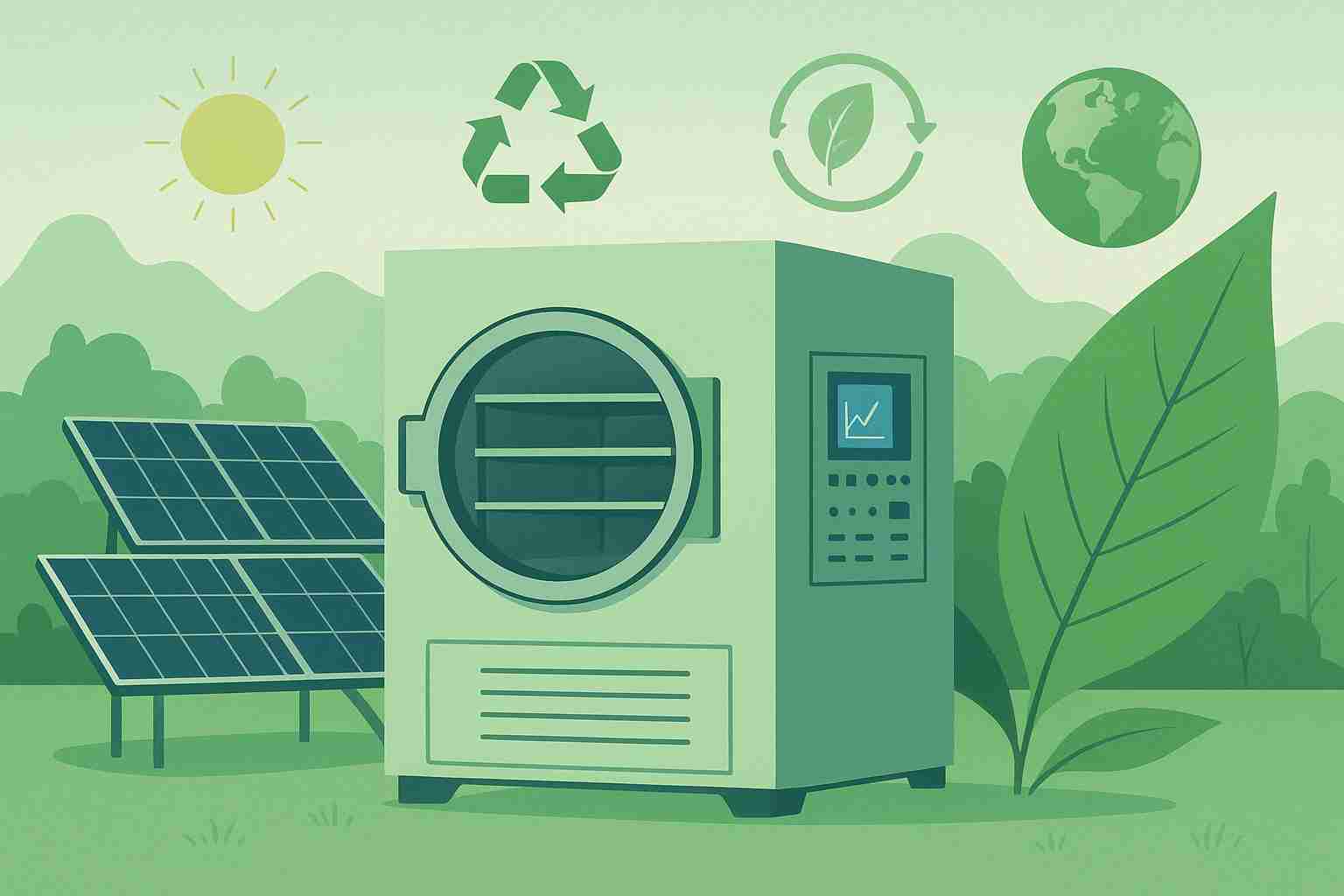
Green Freeze-Drying Technology: Sustainable and Energy-Efficient Lyophilization for a Low-Carbon Future
Introduction
Green Freeze-Drying Technology is transforming the way pharmaceutical, biotechnological, and food industries approach lyophilization. As global industries pivot toward sustainability, this innovation focuses on energy-efficient lyophilization processes that significantly reduce the carbon footprint while maintaining product integrity. By optimizing thermal dynamics, improving process control, and integrating digital intelligence, Green Freeze-Drying Technology aligns with the broader goals of green technology—preserving the planet while ensuring production efficiency.
In recent years, sustainability has evolved from a corporate trend to an operational necessity. Conventional freeze-drying (lyophilization) methods consume large amounts of energy due to extreme temperature gradients and vacuum operations. The shift to eco-friendly lyophilization systems aims to minimize these inefficiencies through smart automation, renewable energy integration, and advanced heat recovery systems.
What Is Green Freeze-Drying Technology?
Green Freeze-Drying Technology represents an evolution in lyophilization that incorporates sustainable design principles and energy optimization techniques to reduce environmental impact. Unlike traditional systems that rely heavily on fossil fuel-derived energy, green freeze dryers utilize:
-
Renewable energy sources such as solar or geothermal systems,
-
Advanced insulation and vacuum efficiency,
-
Low-GWP (Global Warming Potential) refrigerants, and
-
Smart process analytics for minimal energy waste.
Through intelligent monitoring tools and automation (like AI-based control systems discussed in Freeze Drying AI Monitoring: Smarter Control & Defect Prevention), these systems make the freeze-drying process more precise and sustainable.
Why Sustainability Matters in Freeze-Drying
Lyophilization is vital for stabilizing temperature-sensitive biopharmaceuticals, vaccines, probiotics, and food products. However, it is energy-intensive, consuming up to 40–50% more power compared to standard drying processes. This makes sustainability in lyophilization not just a technological upgrade but an environmental responsibility.
Energy-efficient systems also align with Good Manufacturing Practices (GMP) and modern regulatory expectations for sustainability in production, as detailed in GMP Freeze-Drying Guidelines.
By implementing Green Freeze-Drying Technology, manufacturers achieve:
- Reduced greenhouse gas emissions,
- Optimized power usage,
- Compliance with eco-regulatory standards, and
- Lower operational costs.
Core Principles of Green Freeze-Drying Technology
1. Energy Efficiency and Thermal Optimization
The key to energy-efficient lyophilization lies in precise temperature and pressure control. Techniques such as heat recovery from compressors, variable-speed vacuum pumps, and intelligent shelf heating management reduce energy consumption by up to 25%.
Further insights on heating systems can be explored in Heating Media Control in Lyophilization.
2. Renewable Energy Integration
Modern green freeze dryers integrate renewable power sources such as solar photovoltaic panels or geothermal systems for chilling and vacuum generation. This hybrid approach dramatically reduces the system’s carbon intensity, making production greener.
3. Environmentally Safe Refrigerants
Traditional freeze dryers often use refrigerants with high GWP values. Newer green systems adopt eco-friendly alternatives like R-290 (propane) and CO₂-based refrigerants, which maintain thermal efficiency while ensuring environmental compliance.
4. Smart Digital Control and Automation
Smart process analytics and AI-driven sensors enhance real-time process control. With platforms such as PAT (Process Analytical Technology), manufacturers can optimize product temperature, chamber pressure, and sublimation rates efficiently. Refer to PAT in Freeze Drying for a deeper understanding of how process data improves sustainability.
5. Recyclable Materials and Low-Waste Design
Green lyophilizers are designed with eco-conscious materials that allow easier recycling and extended equipment life. Modular construction also reduces replacement waste during upgrades, promoting a circular economy approach in equipment design.
Technological Innovations Driving Green Freeze-Drying
1. Continuous Lyophilization
Conventional batch freeze-drying systems are energy-heavy. The Continuous Freeze-Drying Process introduces non-stop operation with optimized heat transfer, reducing idle energy use. This innovation, explored in detail at Continuous Freeze-Drying Process in Pharmaceuticals, represents a significant step toward sustainable scalability.
2. Lyophilization 4.0 and Automation
Under the Lyophilization 4.0 paradigm, digital twins, IoT integration, and AI-based analytics continuously monitor and fine-tune energy parameters. This ensures maximum efficiency with minimum human intervention, aligning with global Industry 4.0 sustainability frameworks.
For more, see Lyophilization 4.0: Smart Freeze-Drying.
3. Blockchain in Supply Chain Traceability
Blockchain in Lyophilization Supply Chain enhances transparency and traceability of eco-friendly manufacturing processes. It ensures each batch follows sustainable sourcing and production norms, improving brand accountability.
Learn more at Blockchain in Lyophilization Supply Chain.
4. Cryo-Microscopy for Process Insight
Through Cryo-Microscopy, scientists can visualize sublimation and drying dynamics in real time. This enables optimization of parameters for energy savings, product quality, and reduced waste.
Explore further at Cryo-Microscopy in Freeze-Drying.
5. AI Monitoring for Energy Reduction
Artificial Intelligence assists in predictive maintenance and dynamic control, reducing energy wastage from faulty operations. AI-based fault detection helps avoid compressor overheating and unnecessary defrost cycles. See Freeze Drying AI Monitoring: Smarter Control & Defect Prevention.
Energy-Saving Strategies in Green Freeze-Drying Systems
-
Vacuum Optimization: Using efficient vacuum pumps and intelligent throttling reduces power losses.
-
Shelf Temperature Uniformity: Prevents overcooling and energy spikes.
-
Condensate Heat Reuse: Recycling latent heat from condensate recovery minimizes compressor load.
-
Smart Scheduling: Aligns lyophilization cycles with renewable energy availability.
-
Improved Insulation: Reduces thermal leakage and preserves cold energy.
For best practices, read Lyophilization Process Efficiency: Optimized Freeze-Drying.
Impact of Green Freeze-Drying on Pharmaceutical Manufacturing
The pharmaceutical sector stands to gain the most from Green Freeze-Drying Technology due to the high energy demand of drug lyophilization.
Key benefits include:
-
Lower carbon emissions,
-
Reduced utility costs,
-
Enhanced product stability, and
-
Compliance with sustainability frameworks such as ISO 14001.
For industry-level insights, see Best Freeze Dryer for Pharmaceutical Manufacturing.
Applications Across Industries
-
Pharmaceuticals: Biologics, vaccines, and gene therapy drugs.
→ Freeze Drying for Cell and Gene Therapy -
Veterinary Medicine: Long-term preservation of animal drugs.
→ Lyophilization in Veterinary Drugs -
Food Industry: Nutrient retention in fruits, dairy, and emergency meals.
-
Cosmetics: Preservation of bioactive ingredients without synthetic additives.
Challenges in Implementing Green Freeze-Drying
While the benefits are immense, challenges persist:
-
High initial investment,
-
Need for renewable energy infrastructure,
-
Regulatory adaptation for new refrigerants,
-
Process validation under GMP.
Yet, as sustainable technology advances, the ROI of green systems is improving rapidly, as discussed in Freeze Dryer Installation Cost and ROI.
The Future of Green Freeze-Drying Technology
Emerging innovations—such as hybrid solar-powered lyophilizers, AI-assisted process mapping, and biodegradable packaging integration—will define the future of sustainable freeze-drying. The ultimate goal is a carbon-neutral lyophilization facility, supported by smart automation and clean energy grids.
Future systems will also leverage continuous digital validation through Lyophilization Cycle Development and GMP compliance frameworks, ensuring global adoption of sustainable standards.
Conclusion
Green Freeze-Drying Technology represents a paradigm shift toward sustainability in industrial and pharmaceutical manufacturing. By integrating energy-efficient systems, AI automation, and renewable energy, it paves the way for a low-carbon, high-efficiency future. As global climate goals tighten, adopting green lyophilization systems will not just be an innovation—but a necessity.
FAQs about Green Freeze-Drying Technology
1. What is Green Freeze-Drying Technology?
It is a sustainable, energy-efficient approach to lyophilization that minimizes carbon footprint using renewable energy and smart automation.
2. How does it differ from traditional freeze-drying?
Green systems use eco-friendly refrigerants, AI-driven control, and heat recovery mechanisms for reduced energy consumption.
3. Is it suitable for pharmaceutical manufacturing?
Yes. It meets GMP and environmental standards, improving efficiency and sustainability.
4. Can Green Freeze-Drying reduce operational costs?
Absolutely. While setup costs are higher, energy and maintenance savings offer long-term ROI.
5. Does it affect product quality?
No, it maintains or improves product integrity due to optimized process control.
6. What role does AI play in Green Freeze-Drying?
AI optimizes cycle parameters, detects energy inefficiencies, and predicts faults to save power.
7. Are eco-friendly refrigerants effective for low-temperature freezing?
Yes, modern alternatives like CO₂-based and hydrocarbon refrigerants deliver equivalent cooling.
8. How can food industries benefit?
They can achieve longer shelf life, reduced energy costs, and sustainable packaging options.
9. Is blockchain used in sustainable freeze-drying?
Yes, for supply chain traceability and verifying sustainable sourcing.
10. What is the future outlook?
A full transition toward carbon-neutral, AI-driven, and renewable-powered lyophilization plants by 2030.